
BABY CLUBFOOT JOURNEY
Santiago’s Clubfoot Journey: From Newborn Diagnosis to Full Correction
A Patient Story from Southern California Foot & Ankle
Clubfoot is a congenital condition that we frequently identify shortly after birth. While the diagnosis can be concerning for families, it is important to understand that newborn clubfoot is highly treatable, especially when addressed early.
At Southern California Foot & Ankle, we utilize a structured, evidence-based approach centered on the Ponseti method, which remains the gold standard for correction. In select cases, a tendo-Achilles lengthening (TAL) procedure is performed to achieve full correction.
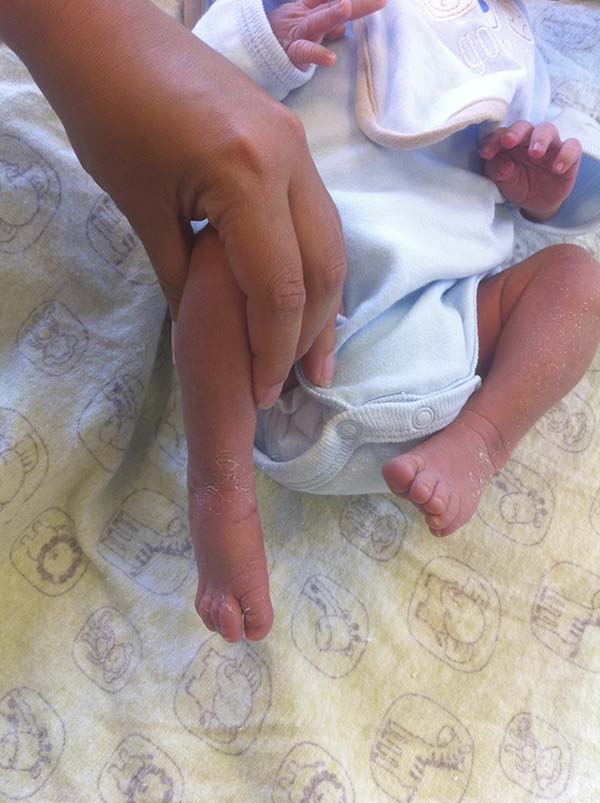
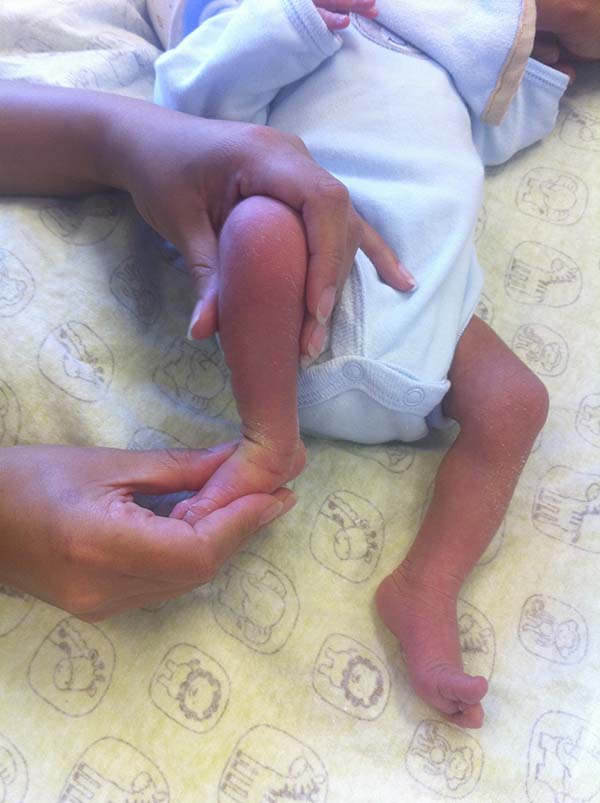
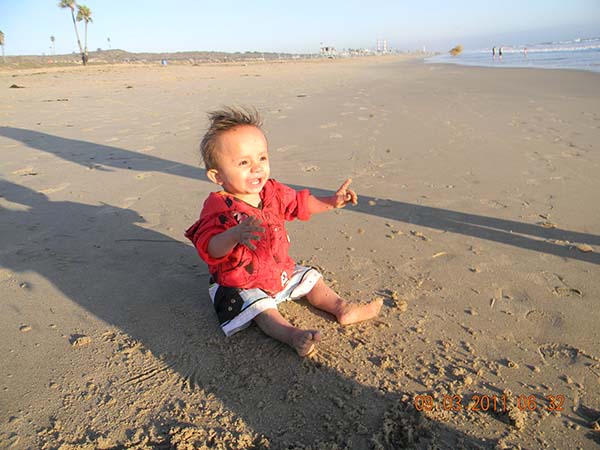
In this case, we review the treatment course of Santiago, a newborn diagnosed shortly after delivery.
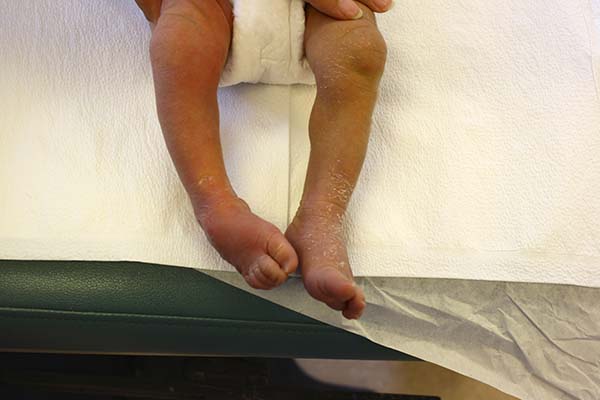
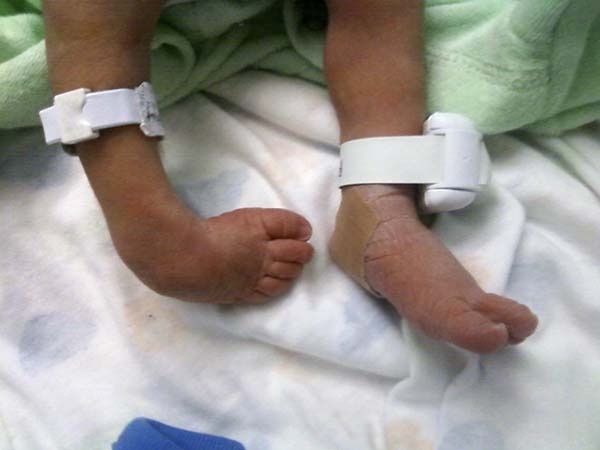
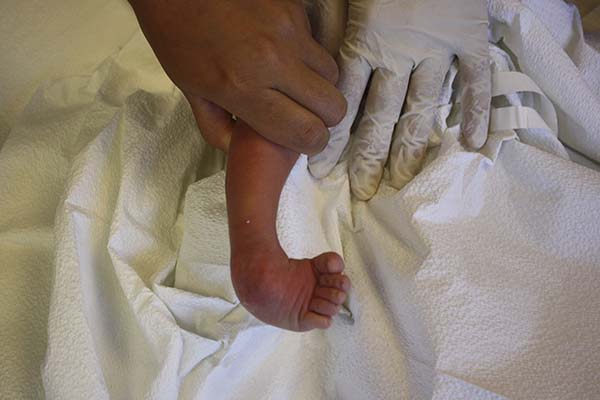
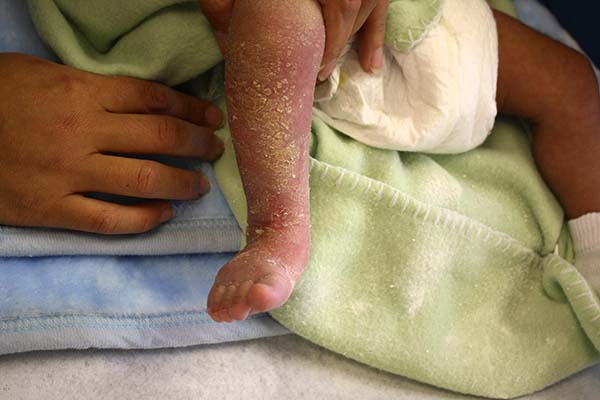
Santiago was diagnosed with clubfoot shortly after birth during routine newborn evaluation. As is often the case, the family was understandably concerned and had many questions regarding function, mobility, and long-term outcomes.
He was evaluated shortly thereafter in a newborn clubfoot consult at Southern California Foot & Ankle, where he was seen by Dr. Spencer and Dr. Rodriguez.
During the initial assessment, we:
- Confirmed the diagnosis and severity
- Reviewed expected response to treatment
- Discussed the Ponseti method in detail
- Outlined a staged correction plan
Early consultation allows us to begin treatment promptly, which is strongly associated with improved outcomes.




Ponseti Casting Protocol
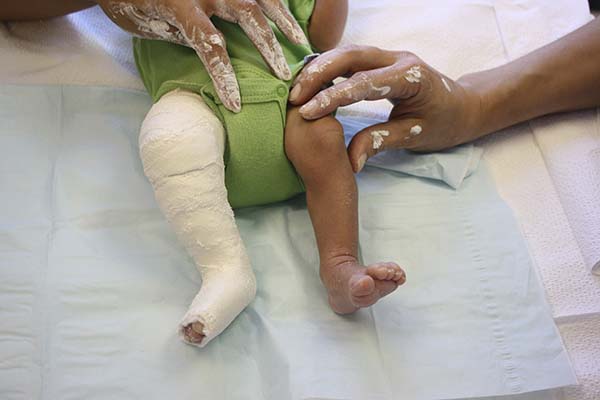
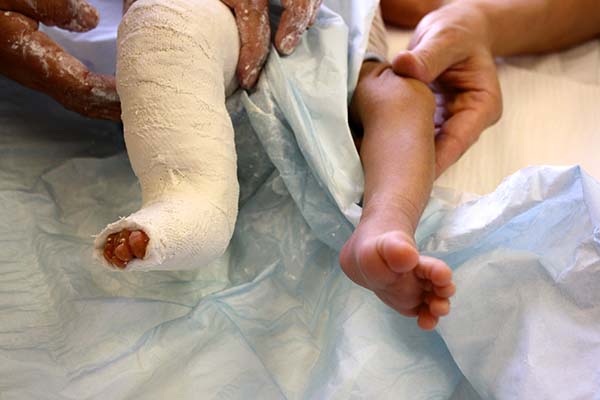
The Ponseti method relies on a series of gentle, sequential casts designed to gradually correct deformity without invasive intervention.
First Cast Application
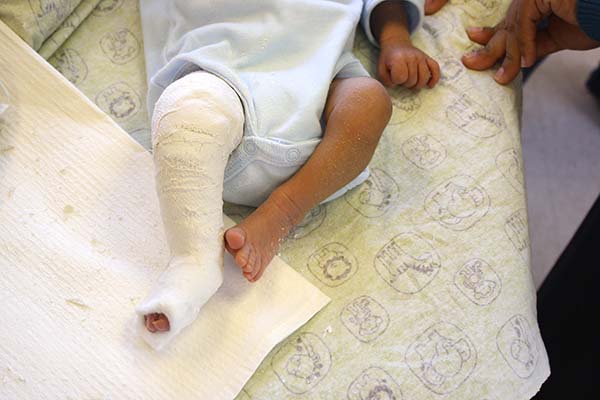
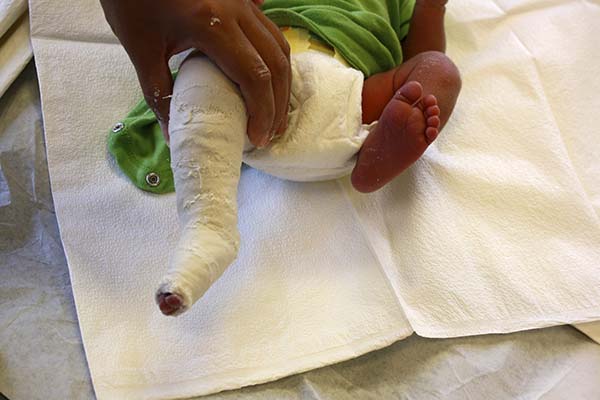
Treatment began with the newborn clubfoot first cast application, which initiates controlled correction of foot alignment.
Second & Third Casts
At the second cast, early correction becomes measurable as soft tissue structures begin to respond.
By the third cast, progressive improvement in alignment and flexibility is typically observed, as was the case with Santiago.
Fourth Cast & TAL Preparation
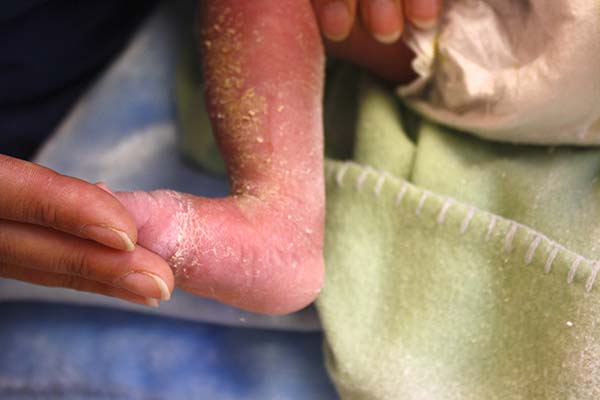
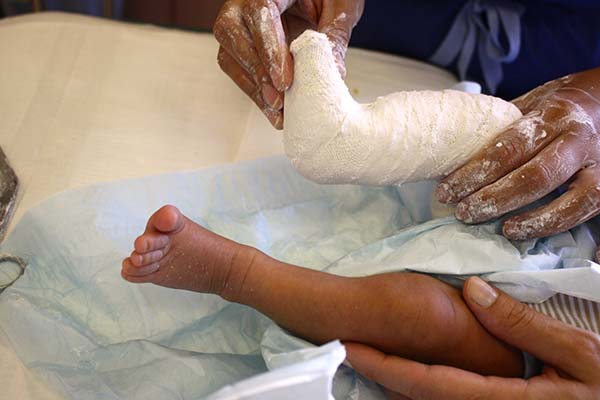
By the time of the newborn clubfoot fourth cast, significant correction had been achieved; however, residual equinus deformity of the ankle was present.
At this stage, we prepared the family for the possibility of a tendo-Achilles lengthening (TAL) procedure, which is commonly indicated to complete correction.
Fifth Cast & TAL Procedure
Santiago subsequently underwent a TAL procedure, a minimally invasive intervention that allows for controlled lengthening of the Achilles tendon.
Following the procedure, a fifth cast application was placed to:
- Maintain corrected alignment
- Protect the surgical adjustment
- Allow appropriate soft tissue healing
This final casting phase is essential in stabilizing correction prior to bracing.
Transition to Foot Abduction Bracing
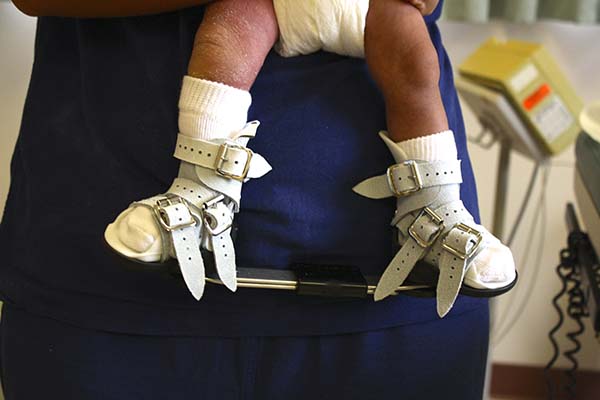
Following completion of casting, Santiago transitioned into a Ponseti foot abduction brace.
Brace protocol typically includes:
- Full-time wear initially (23+ hours/day)
- Gradual reduction to nighttime and nap use
- Long-term maintenance phase for relapse prevention
Compliance with clubfoot bracing is one of the most important predictors of long-term success and is emphasized throughout treatment.
Parental Perspective
From a clinical standpoint, we recognize that clubfoot treatment affects the entire family, not just the patient.
Santiago’s mother, Crystal, expressed understandable concern at the diagnosis. However, over the course of treatment, she reported increasing reassurance as she observed steady progress.
Key elements that supported the family included:
- Consistent communication at each visit
- Clear explanation of each treatment phase
- Guidance regarding bracing expectations
- Assistance with logistical and insurance-related concerns
- Visible improvement with each casting stage
This partnership between physician and family is central to successful outcomes in newborn clubfoot care.
Treatment Outcome & Developmental Progress
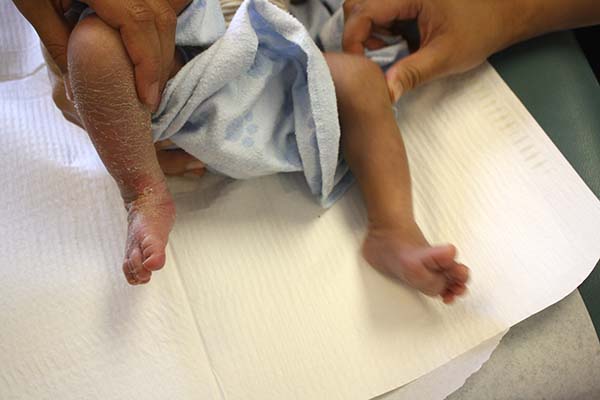
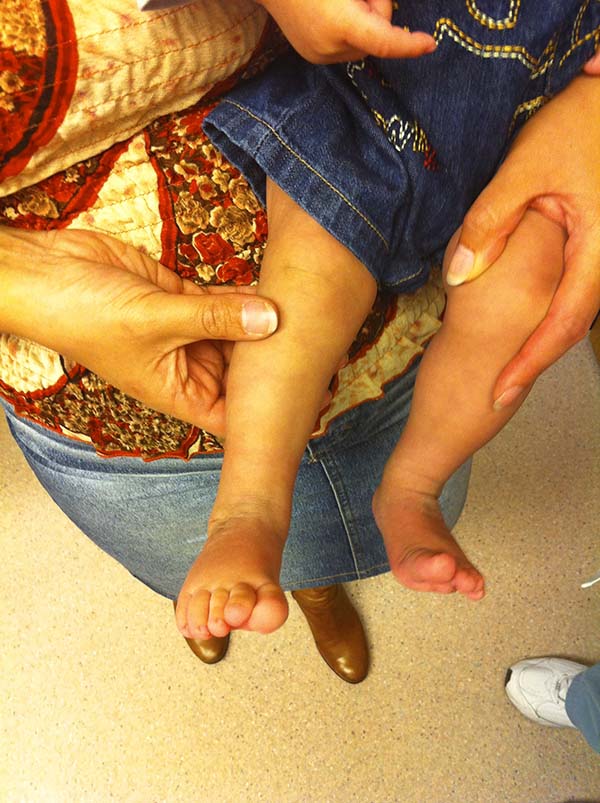
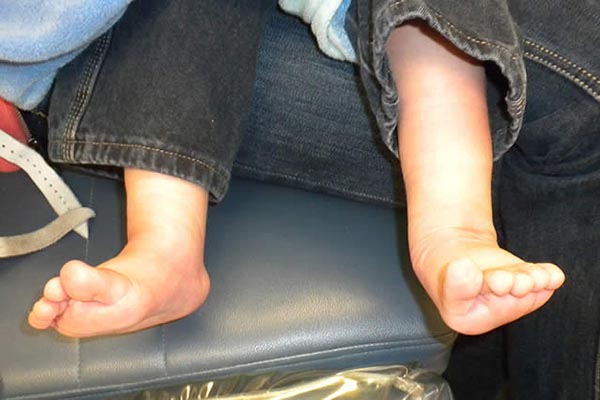
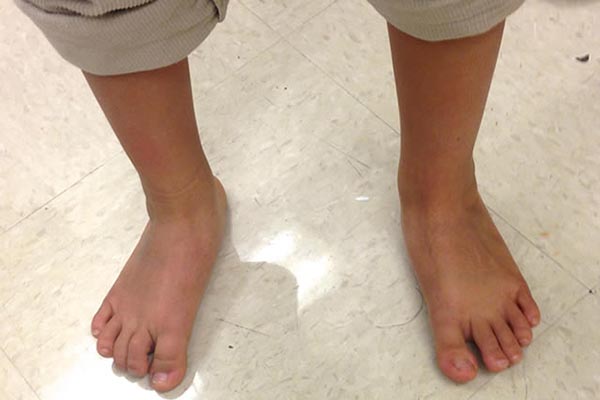
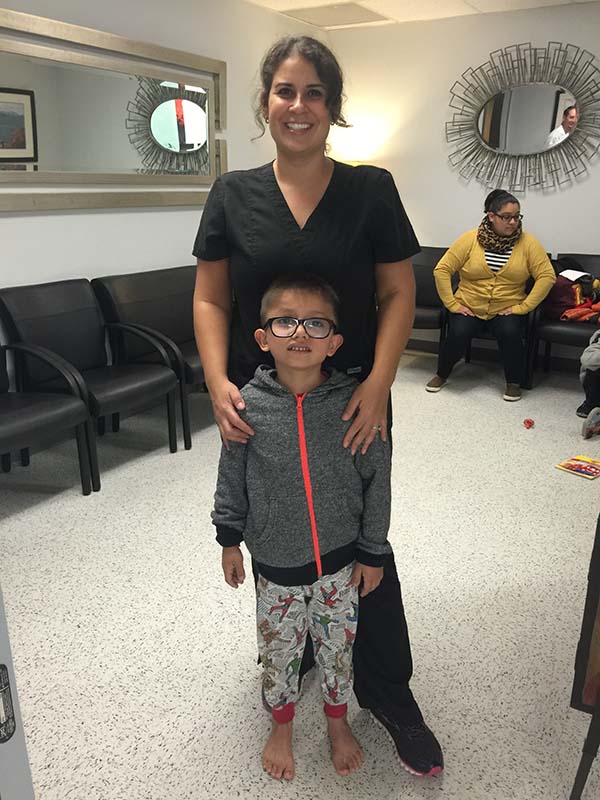
By age 3–4, Santiago achieved full correction with normal functional development.
His outcomes included:
- Age-appropriate independent ambulation
- Normal running and recreational activity
- Participation in sports and play without limitation
- No functional restrictions in daily life
- Maintained correction without recurrence
This represents an excellent clubfoot treatment outcome, consistent with expected results when the Ponseti protocol is followed appropriately.
Clinical Summary
Santiago’s treatment course included:
- Early diagnosis at birth
- Standardized Ponseti casting protocol (5 casts)
- Tendo-Achilles lengthening (TAL) procedure
- Transition into foot abduction bracing
- Full correction with normal development by early childhood
This case reflects the effectiveness of early, structured intervention in newborn clubfoot management.
Frequently Asked Questions
Is clubfoot in newborns correctable?
Yes. The majority of cases respond very well to early Ponseti method treatment.
How many casts are typically required?
Most patients require between 4 and 6 casts, depending on severity and response.
Is surgery always necessary?
No. Many cases are corrected without surgery. TAL is only used when residual tightness remains.
How long is bracing required?
Bracing is typically required through early childhood during sleep to prevent recurrence.
What is the success rate?
When treatment is initiated early and followed appropriately, long-term success rates are very high.
Early evaluation is critical for optimal outcomes in clubfoot treatment.
At Southern California Foot & Ankle, we provide comprehensive care for:
- Newborn clubfoot evaluation and treatment
- Ponseti method casting protocols
- TAL procedure when indicated
- Long-term bracing and follow-up care
We encourage families to seek evaluation as early as possible to initiate timely correction and maximize functional outcomes. Treating clubfoot is a journey! At Southern California Foot & Ankle Specialists, we want to make that journey with you, giving you peace of mind and ensuring the best outcome for your little one!
Contact Us
Ladera Ranch
333 Corporate Dr. Ste 230, Ladera Ranch, CA 92694
Tel: (949) 364-9255 (WALK)
Fax: (949) 364-9250
Office Hours:
Monday - Friday: 9am - 5pm
*(Lunch 12 noon - 1pm)
Orange
2617 E Chapman Ave. Ste 303, Orange, CA 92869
Tel: (714) 639-7993
Fax: (714) 639-0729
Office Hours:
Monday - Friday: 9am - 5pm
*(Lunch 12 noon - 1pm)